
- Who We Are
- History
The Mill That Helped Build Spring Grove
For more than 160 years, the Spring Grove mill has helped shape its community, advance American paper making, and carry forward a tradition of environmental stewardship.
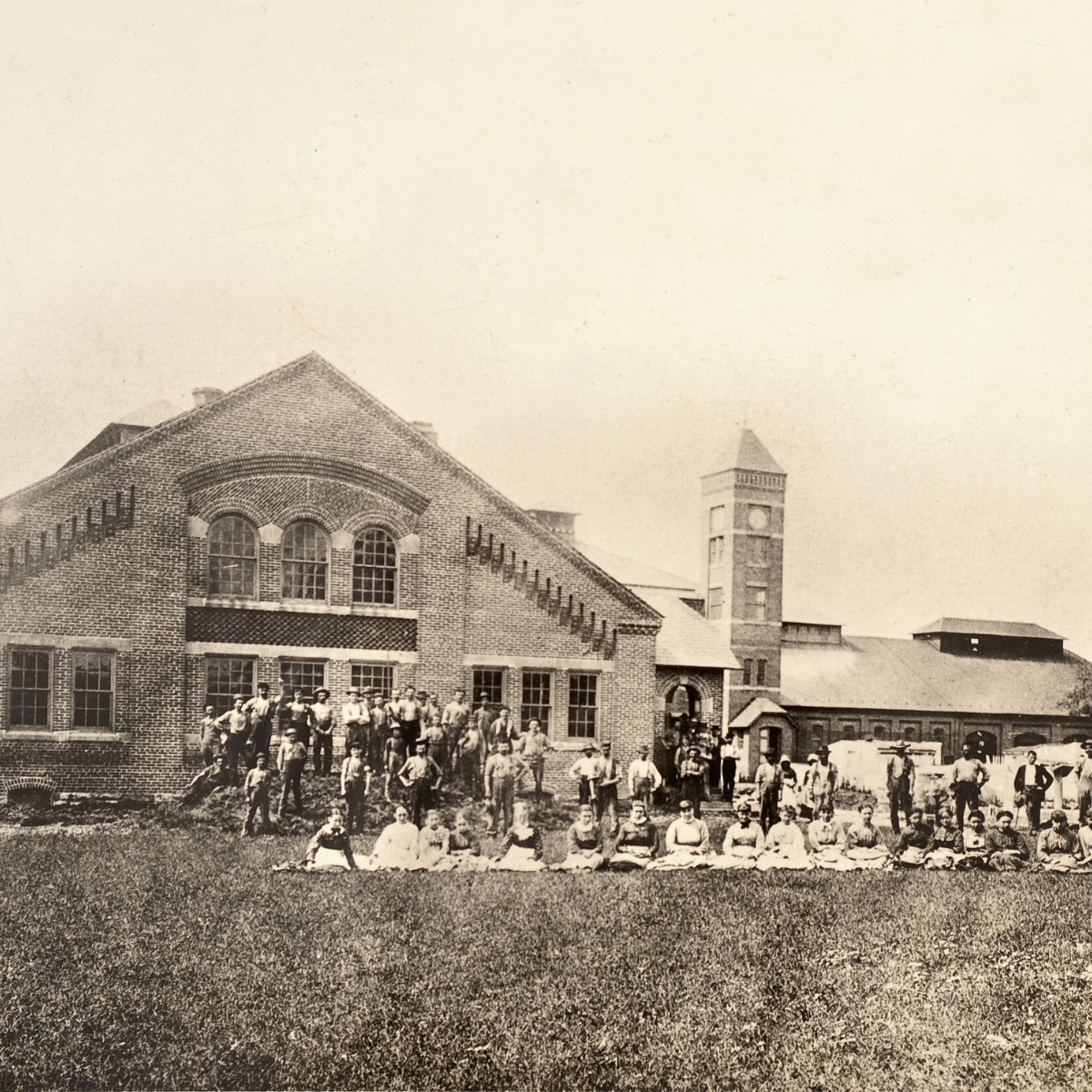
The foundation of a paper-making legacy
A History of Community
From its earliest years, the Spring Grove mill invested in the prosperity and well-being of the community. The connection between mill and town remains one of the most meaningful parts of our story.
Explore the history >
1870s
Building the Town's Foundation
The mill helped build the foundation of a strong Spring Grove community. Investments included a new brick schoolhouse for local children, the original St. Paul’s Lutheran Church, and the first fire engine house to support Friendship Hose Company No. 1.
1870s
Bringing Modern Conveniences to Spring Grove
The vision of building a world-class paper mill firmly rooted in the community began paying dividends for Spring Grove. The mill helped support modern infrastructure for the town, including running water from the reservoir and electric lights powered by cost-effective electricity generated by the mill.
Early 1900s
A Place to Learn for Generations
William Glatfelter, with support from his father, funded a modern public school building for Spring Grove.
The new building gave the community room to grow and gave local children a place to learn for generations to come. It continues to serve the community today.
1920s
Keeping People Informed and Connected
Long before employee communications became common practice, the company published the monthly Barker magazine to share information about safety, fire prevention, cleanliness and company life.
In 1923, the mill carried that same spirit of education beyond its walls, welcoming New York paper merchants to Spring Grove for tours and educational programs that helped build lasting industry relationships.
1940s
Standing Behind Those Who Served
During World War II, the mill stood behind the employees who left to serve. The company sent issues of The Barker and money overseas to give servicemen a much-needed taste of home.
The mill offered a guarantee that every employee serving in the military would have a position waiting when they returned.
1940s
Honoring Women Workers
With many men serving in the military, women stepped into essential roles across the mill and helped keep operations moving through wartime shortages. Their work became essential to the mill’s ability to keep producing and earned praise from its leadership.
“We could hardly keep operating without them.”
- P.H. Glatfelter
1940s
Sharing Safety Culture
The mill’s safety culture reached beyond the workplace and into the community. What began as an annual employee safety night grew into a full community safety week, with educational events and entertainment paid for by the company.
1972
A Show of Strength
When Hurricane Agnes tore through the mill and left Spring Grove under 5 feet of water, hundreds of employees worked heroically to bring the facility back to normal operation.
Their response reflected the strength of the mill community, the resilience of Spring Grove, and the shared commitment to keep moving through one of the town’s toughest moments.
Today
The Connection Continues
Pixelle upholds this community legacy through the people who work at the Spring Grove mill and the generations of families connected to it.
From scholarships for graduating Spring Grove High School seniors to support for local youth and community programs, Pixelle’s connection to the community lives on through investments in the next generation.
A History of American Ingenuity
The Spring Grove mill was built by people who saw opportunity in challenge. Across generations, that spirit shaped a mill known for practical ideas, bold investments, and the drive to keep making better paper.
Explore the history >
1864
Careful Planning in Wartime
Amid the turmoil of the Civil War, the mill opened its doors. White linen rags, the fibers used to make paper, were expensive and in short supply, a challenge that had pushed the Hauer mill into insolvency.
Philip Glatfelter’s careful planning yielded a very different result. After seven months of securing enough supply to operate without interruption, the mill began production on July 2, 1864, producing 1,500 pounds of newsprint per day.
1860s
From Horse-Drawn Wagons to Railroads
The first expansion came quickly, with production more than doubling from 1,500 to 4,000 pounds of newsprint per day.
That growth brought a new challenge: the nearest railroad was miles away in York, leaving raw materials and finished paper to be hauled by horse-drawn wagon. Recognizing the need for greater efficiency, the mill set the wheels in motion for a railroad to pass through Spring Forge.
1880
The World’s Largest Paper Machine
In 1880, the mill made history with the installation of the world’s largest paper machine, a 100-inch Fourdrinier.
Part of a period of bold investment, the machine helped advance the mill’s ambition to become an industry leader and remained part of the Spring Grove story for generations.
1880s-1890s
From Newsprint to Fine Papers
By its 25th anniversary, the mill had become one of the most modern and efficient in the industry, with production exceeding 100,000 pounds of paper per day.
With strong distribution channels in place, the mill shifted from newsprint to fine printing and writing papers, including papers for books, envelopes, lithography and business forms. Its first sale of cream book paper came in 1890, followed by its first envelope paper in 1892.
1923
An Industry-Changing Design
The mill delivered a technological breakthrough for the paper industry when engineers designed PM Number 2’s Fourdrinier section so the wire could be replaced without dismantling the entire machine.
Built as part of an 85,000-square-foot expansion to meet growing demand for quality book paper, PM Number 2 reduced maintenance, improved productivity, and helped solidify the mill’s reputation for innovation.
1940s
Setting a New Standard for Safety
Even through wartime disruptions, the mill never stopped emphasizing safety. The company produced Plan for Safety, the paper industry’s first employee safety education movie, which was quickly adopted by the National Safety Council as an essential safety training tool.
1960s
Marking 100 years with an Industry Record
The postwar years brought a spirit of determined innovation and forward-thinking investment to Spring Grove. The mill marked its 100th anniversary with its largest expansion yet, a $40 million project that included PM 8.
When PM 8 turned its first reel of high-quality paper in 1965, it recorded one of the fastest start-ups in the industry.
1970s - Today
Keeping Pace with Change
As the paper industry changed, the company continued to adapt, strengthening its position in printing and writing papers while expanding into recycled papers, carbonless papers, lightweight papers, and other specialty markets.
That ability to keep moving with the market remains part of the Spring Grove mill’s legacy today.
A History of Sustainability and Stewardship
Long before sustainability became a common business priority, the Spring Grove mill was finding practical ways to use resources responsibly. Its history of stewardship began with the materials used to make paper and grew into a broader commitment to forests, water, wildlife and future generations.
Explore the history >
1880s
A Renewable Fiber Source
As white linen rags continued to be in short supply, the mill invested in state-of-the-art fiber technology that used caustic soda to separate cellulose fibers from wood.
The shift to renewable wood pulp reduced the mill’s dependence on scarce rag supply and helped create a more reliable foundation for future paper making.
1895
A Breakthrough in Pulp Production
The mill achieved a major breakthrough in pulp production with the first successfully operated facility to process both hardwood and softwood pulps.
Until then, softwoods such as pine were considered nearly impossible to process. This breakthrough allowed abundant softwoods to be used in paper making, which eased the strain put on hardwoods by lumber companies and paper mills.
1920s-1930s
Teaching the Value of Sustainable Forestry
To help ensure a reliable supply of wood pulp, the company incorporated the Glatfelter Pulpwood Company and appointed one of the country’s first industrial foresters.
The forestry education program helped farmers around Spring Grove manage their woodlands more effectively. Within two decades, more than 700 farms had managed woodlands, generating revenue that helped many farmers send their children to college.
1950s-1960s
Recognized for Conservation Leadership
The mill’s environmental stewardship earned national recognition when President Dwight D. Eisenhower, on behalf of the American Forestry Association, honored the company with the Distinguished Service Award for the Conservation of Soil, Water, Forests, and Wildlife.
The recognition reflected years of work to keep natural resources abundant and well managed for the benefit of future generations.
1960s
The Creation of Codorus State Park
After a bad drought in 1963, the mill set out to provide the community and its expanded facilities with a more reliable supply of clean water. Embarking on a first-of-its-kind joint venture with the commonwealth of Pennsylvania, the PH Glatfelter dam was constructed along the Codorus Creek.
The earthen dam gave birth to Lake Marburg, a 15 billion gallon reservoir and the centerpiece of a new 3,000 acre recreational area known as Codorus State Park. Today, the park provides a diverse wildlife habitat and destination for outdoor recreation.
1965
Returning Oxygen to the Water
The mill developed a cutting-edge secondary waste treatment facility at a time when wastewater treatment only removed solids.
Company scientists created a patented technology to put oxygen back into the water before returning it to the stream, benefiting local wildlife and making the mill one of the first in the nation with both primary and secondary waste treatment.
Today
Stewardship Built Over Generations
Pixelle carries this tradition forward through practical stewardship, responsible operations, and experienced people who understand the connection between paper making, natural resources and the communities around them.